
Contents
- 🌌 Introduction to Nihilism
- 📚 Historical Roots of Nihilism
- 💔 The Void of Meaning
- 👊 Existential Nihilism
- 🤖 Moral Nihilism
- 🌈 Epistemological Nihilism
- 📝 Nihilism in Art and Literature
- 👀 Criticisms of Nihilism
- 💡 Alternatives to Nihilism
- 🌐 Nihilism in Modern Society
- 📊 Conclusion: The Paradox of Nihilism
- Frequently Asked Questions
- Related Topics
Overview
Nihilism, a concept that has been debated by philosophers and scholars for centuries, is the idea that life has no inherent meaning or value. This philosophy, which has been associated with thinkers such as Friedrich Nietzsche and Arthur Schopenhauer, suggests that traditional morality and values are baseless and that existence is ultimately without purpose. With a vibe score of 6, nihilism is a topic that evokes strong emotions and controversy, sparking debates about the nature of reality, morality, and human existence. The concept has influenced various fields, including art, literature, and politics, with notable examples such as the works of Albert Camus and the Dada movement. As we navigate the complexities of modern life, nihilism remains a relevant and thought-provoking topic, with many arguing that it can be both a destructive and liberating force. As the philosopher Emil Cioran once said, 'Nihilism is not a philosophy, it's a diagnosis,' highlighting the complexities and nuances of this multifaceted concept.
🌌 Introduction to Nihilism
Nihilism is a philosophical concept that has been debated and explored by scholars, philosophers, and artists for centuries. At its core, nihilism is the idea that life has no inherent meaning or value. This concept is closely related to Existentialism, which emphasizes individual freedom and choice. Nihilism can be seen as a response to the Absurdism of the human condition, where individuals seek meaning and purpose in a seemingly meaningless world. The concept of nihilism has been influenced by various philosophers, including Friedrich Nietzsche and Arthur Schopenhauer.
📚 Historical Roots of Nihilism
The historical roots of nihilism can be traced back to ancient Greece, where philosophers such as Socrates and Plato grappled with the nature of reality and knowledge. However, it was not until the 19th century that nihilism emerged as a distinct philosophical movement. The term 'nihilism' was first used by Ivan Turgenev in his novel 'Fathers and Sons', which explored the tensions between traditional values and modernity. Nihilism was also influenced by the Enlightenment values of reason and individualism, which challenged traditional authority and dogma. The concept of nihilism has been shaped by various intellectual and cultural movements, including Romanticism and Modernism.
💔 The Void of Meaning
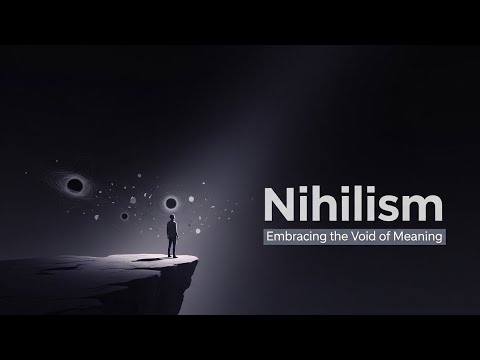
The void of meaning is a central concept in nihilism, which suggests that life has no inherent purpose or significance. This idea is often associated with the concept of Nothingness, which implies that existence is without meaning or value. The void of meaning can be seen as a result of the Death of God, which refers to the decline of traditional religious and metaphysical beliefs. In this sense, nihilism can be seen as a response to the Secularization of modern society, where traditional values and beliefs are no longer seen as absolute or universal. The concept of the void of meaning has been explored by philosophers such as Jean-Paul Sartre and Martin Heidegger.
👊 Existential Nihilism
Existential nihilism is a philosophical perspective that emphasizes individual freedom and choice. This perspective suggests that individuals must create their own meaning and purpose in life, as there is no inherent or objective meaning. Existential nihilism is closely related to Existentialism, which emphasizes individual existence and experience. The concept of existential nihilism has been influenced by philosophers such as Soren Kierkegaard and Albert Camus. Existential nihilism can be seen as a response to the Absurdism of the human condition, where individuals seek meaning and purpose in a seemingly meaningless world. The concept of existential nihilism has been explored in various literary and artistic works, including the writings of Franz Kafka and the films of Stanley Kubrick.
🤖 Moral Nihilism
Moral nihilism is a philosophical perspective that suggests that there is no objective moral framework or universal moral truth. This perspective implies that moral values and principles are relative and subjective, and that there is no inherent right or wrong. Moral nihilism is closely related to Moral Relativism, which suggests that moral values and principles vary across cultures and societies. The concept of moral nihilism has been influenced by philosophers such as Friedrich Nietzsche and Arthur Schopenhauer. Moral nihilism can be seen as a response to the Secularization of modern society, where traditional moral and ethical frameworks are no longer seen as absolute or universal. The concept of moral nihilism has been explored in various literary and artistic works, including the writings of Marquis de Sade and the films of Quentin Tarantino.
🌈 Epistemological Nihilism
Epistemological nihilism is a philosophical perspective that suggests that there is no objective knowledge or truth. This perspective implies that all knowledge and understanding is relative and subjective, and that there is no inherent or absolute truth. Epistemological nihilism is closely related to Postmodernism, which challenges traditional notions of knowledge and reality. The concept of epistemological nihilism has been influenced by philosophers such as Jacques Derrida and Michel Foucault. Epistemological nihilism can be seen as a response to the Information Age, where knowledge and information are increasingly fragmented and decentralized. The concept of epistemological nihilism has been explored in various literary and artistic works, including the writings of Thomas Pynchon and the films of David Lynch.
📝 Nihilism in Art and Literature
Nihilism has had a significant influence on art and literature, particularly in the 20th century. Many artists and writers have explored nihilistic themes and ideas in their work, including the Absurdism of Samuel Beckett and the Surrealism of Salvador Dali. Nihilism has also been a major theme in Film Noir, which often explores the darker aspects of human nature and society. The concept of nihilism has been explored in various literary and artistic works, including the writings of Franz Kafka and the films of Stanley Kubrick. Nihilism has also influenced Music, particularly in the genres of Punk Rock and Industrial Music.
👀 Criticisms of Nihilism
Nihilism has been subject to various criticisms and challenges, particularly from philosophers and scholars who argue that it is a flawed or incomplete perspective. Some critics argue that nihilism is a form of Pessimism, which can lead to a lack of motivation and purpose. Others argue that nihilism is a form of Cynicism, which can lead to a lack of empathy and compassion. The concept of nihilism has been challenged by philosophers such as Emmanuel Levinas and John Rawls, who argue that there are alternative perspectives and values that can provide meaning and purpose. Nihilism has also been criticized for its potential to lead to Nihilistic Terrorism, which can result in violence and harm to others.
💡 Alternatives to Nihilism
There are various alternatives to nihilism, including Humanism, which emphasizes the value and dignity of human life. Other alternatives include Existentialism, which emphasizes individual freedom and choice, and Pragmatism, which emphasizes practicality and effectiveness. The concept of nihilism has been challenged by philosophers such as Emmanuel Levinas and John Rawls, who argue that there are alternative perspectives and values that can provide meaning and purpose. Alternatives to nihilism can be seen as a response to the Absurdism of the human condition, where individuals seek meaning and purpose in a seemingly meaningless world. The concept of alternatives to nihilism has been explored in various literary and artistic works, including the writings of Albert Camus and the films of Terrence Malick.
🌐 Nihilism in Modern Society
Nihilism has had a significant influence on modern society, particularly in the areas of Politics and Culture. Many people have been influenced by nihilistic ideas and perspectives, particularly in the areas of Postmodernism and Secularization. Nihilism has also been a major theme in Social Media, where individuals often express nihilistic views and perspectives. The concept of nihilism has been explored in various literary and artistic works, including the writings of Thomas Pynchon and the films of David Lynch. Nihilism has also influenced Music, particularly in the genres of Punk Rock and Industrial Music.
📊 Conclusion: The Paradox of Nihilism
In conclusion, nihilism is a complex and multifaceted concept that has been debated and explored by scholars, philosophers, and artists for centuries. While nihilism can be seen as a flawed or incomplete perspective, it has also had a significant influence on modern society and culture. The concept of nihilism has been shaped by various intellectual and cultural movements, including Romanticism and Modernism. Nihilism has also been influenced by various philosophers, including Friedrich Nietzsche and Arthur Schopenhauer. As we move forward in the 21st century, it is likely that nihilism will continue to be a major theme and influence in art, literature, and culture.
Key Facts
- Year
- 1862
- Origin
- Germany
- Category
- Philosophy
- Type
- Philosophical Concept
- Format
- what-is
Frequently Asked Questions
What is nihilism?
Nihilism is a philosophical concept that suggests that life has no inherent meaning or value. It is often associated with the idea that there is no objective moral framework or universal moral truth. Nihilism can be seen as a response to the absurdism of the human condition, where individuals seek meaning and purpose in a seemingly meaningless world. The concept of nihilism has been influenced by various philosophers, including Friedrich Nietzsche and Arthur Schopenhauer.
What are the different types of nihilism?
There are several types of nihilism, including existential nihilism, moral nihilism, and epistemological nihilism. Existential nihilism emphasizes individual freedom and choice, while moral nihilism suggests that there is no objective moral framework or universal moral truth. Epistemological nihilism implies that all knowledge and understanding is relative and subjective, and that there is no inherent or absolute truth. The concept of nihilism has been explored in various literary and artistic works, including the writings of Franz Kafka and the films of Stanley Kubrick.
What are the criticisms of nihilism?
Nihilism has been subject to various criticisms and challenges, particularly from philosophers and scholars who argue that it is a flawed or incomplete perspective. Some critics argue that nihilism is a form of pessimism, which can lead to a lack of motivation and purpose. Others argue that nihilism is a form of cynicism, which can lead to a lack of empathy and compassion. The concept of nihilism has been challenged by philosophers such as Emmanuel Levinas and John Rawls, who argue that there are alternative perspectives and values that can provide meaning and purpose.
What are the alternatives to nihilism?
There are various alternatives to nihilism, including humanism, existentialism, and pragmatism. Humanism emphasizes the value and dignity of human life, while existentialism emphasizes individual freedom and choice. Pragmatism emphasizes practicality and effectiveness, and suggests that meaning and purpose can be found in action and experience. The concept of nihilism has been challenged by philosophers such as Emmanuel Levinas and John Rawls, who argue that there are alternative perspectives and values that can provide meaning and purpose.
How has nihilism influenced modern society?
Nihilism has had a significant influence on modern society, particularly in the areas of politics and culture. Many people have been influenced by nihilistic ideas and perspectives, particularly in the areas of postmodernism and secularization. Nihilism has also been a major theme in social media, where individuals often express nihilistic views and perspectives. The concept of nihilism has been explored in various literary and artistic works, including the writings of Thomas Pynchon and the films of David Lynch.
What is the relationship between nihilism and absurdism?
Nihilism and absurdism are closely related concepts, as both suggest that life has no inherent meaning or value. Absurdism emphasizes the contradictions and paradoxes of human existence, while nihilism emphasizes the lack of objective meaning or purpose. The concept of absurdism has been explored by philosophers such as Albert Camus and Samuel Beckett, who argue that individuals must create their own meaning and purpose in life. The concept of nihilism has been influenced by various philosophers, including Friedrich Nietzsche and Arthur Schopenhauer.
How has nihilism influenced art and literature?
Nihilism has had a significant influence on art and literature, particularly in the 20th century. Many artists and writers have explored nihilistic themes and ideas in their work, including the absurdism of Samuel Beckett and the surrealism of Salvador Dali. Nihilism has also been a major theme in film noir, which often explores the darker aspects of human nature and society. The concept of nihilism has been explored in various literary and artistic works, including the writings of Franz Kafka and the films of Stanley Kubrick.